 Restore
About Restore
Not a hospital.
A place to exhale.
Restore is a specialized occupational therapy clinic built around one idea: that recovery goes better when you feel like a person, not a patient number. Our waiting room doesn't have overhead fluorescents and a TV playing the news. It has natural light, quiet, and a staff member who already knows your name when you walk in.
We work with children who need to learn how to hold a pencil, adults rebuilding their hands after surgery, stroke survivors reclaiming their morning routines, and aging parents who want to stay in their own homes. Every program is built around what matters most to you — not a generic protocol.
1,400+
Patients served
4.9
Average rating
11 yrs
In practice
4
Specialties
Ready to take the next step?
Schedule your first visit — we'll handle the rest.

Pediatric Development
OTD, OTR/L — Pediatric Specialist
Meet your specialist
Dr. Elena Reyes
"The real breakthroughs happened at the kitchen table, not the exam room."
Dr. Reyes spent three years in pediatric neurology before she realized something: the children who made the most progress weren't the ones with the most clinical intervention — they were the ones whose therapists understood what mattered to them. Now she builds every program around a child's actual world: their favorite breakfast, the game they want to play at recess, the moment they want to feel capable.
Recent outcome
"A 7-year-old referred for sensory processing difficulties couldn't tolerate the texture of most foods or the feeling of seams in clothing. Within 12 sessions, he was eating lunch in the cafeteria with his classmates."
What the path forward looks like with Elena
Week 1
Play-based assessment — we learn what your child loves
Week 2–4
Sensory diet + fine motor foundations
Week 5–8
Real-world task practice with home carry-over
Week 9+
Independence goals — school, play, self-care

Hand & Upper Extremity
OTR/L, CHT — Certified Hand Therapist
Meet your specialist
Marcus Chen
"Recovery isn't a straight line. We plan for the detours."
Marcus trained in orthopedic surgery recovery before becoming a Certified Hand Therapist — one of fewer than 6,000 in the country. He understands both the surgical reality and the practical gap between "medically healed" and "functionally recovered." He designs programs around the specific tasks his patients need to return to: a carpenter who needs grip strength back, a teacher who needs to write on a whiteboard again.
Recent outcome
"A 54-year-old contractor who had carpal tunnel release surgery was told he'd be back to work in 6 weeks. He came to us at week 8 still unable to grip a hammer. Six sessions later, he was back on site."
What the path forward looks like with Chen
Week 1
Grip & range assessment, custom splinting if needed
Week 2–3
Edema management + scar tissue work
Week 4–6
Strengthening + task-specific training
Week 7+
Return-to-work or daily life simulation

Stroke & Neurological Recovery
OTD, OTR/L — Neuro Rehabilitation
Meet your specialist
Dr. Amara Osei
"The brain is still learning. We just have to give it the right classroom."
Dr. Osei completed her doctoral research on neuroplasticity-based upper limb recovery after stroke. But what she'll tell you changed her practice most was a patient named Robert — a retired jazz pianist who came to her 8 months post-stroke, left hand nearly non-functional. She spent 4 months rebuilding not just his hand strength, but his ability to play a full chord. He performed at his granddaughter's birthday party.
Recent outcome
"A 68-year-old stroke survivor who hadn't been able to button his own shirts for 11 months. After 16 sessions focused on task-oriented training and mirror therapy, he dressed himself completely independently."
What the path forward looks like with Amara
Week 1–2
Functional assessment + goal mapping
Week 3–6
Neuroplasticity exercises, constraint therapy
Week 7–12
ADL retraining — dressing, cooking, hygiene
Week 13+
Community reintegration + maintenance plan
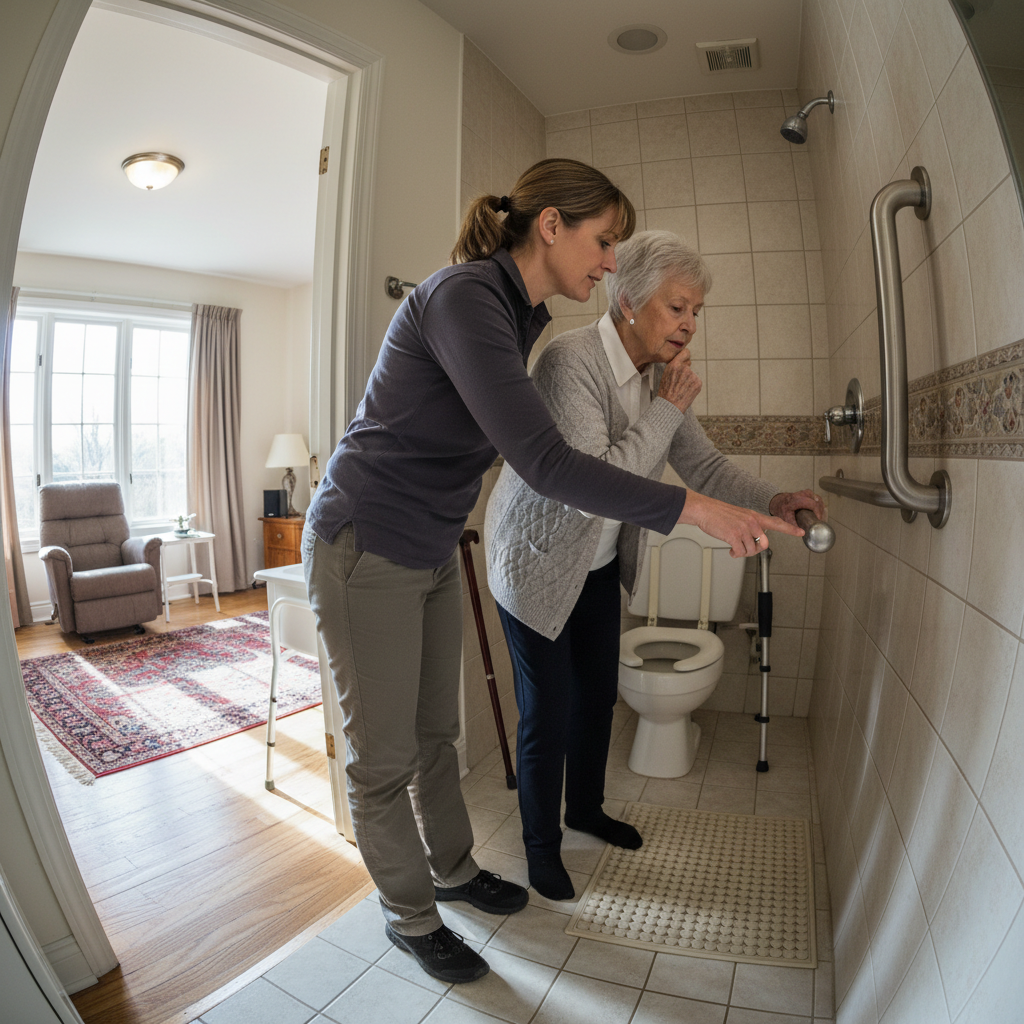
Home Safety & Independence
OTR/L, CAPS — Aging in Place Specialist
Meet your specialist
Patricia Nguyen
"Staying home isn't just a preference. For most people, it's everything."
Patricia holds a Certified Aging in Place Specialist credential and has completed over 400 home assessments. She grew up watching her grandmother lose independence piece by piece because no one intervened early enough. Now she works with families to identify risks before a fall happens, adapt environments before a diagnosis forces a move, and restore the small daily freedoms — making your own coffee, getting to the bathroom at night — that tell a person they still have agency over their own life.
Recent outcome
"A family called after their 81-year-old mother had her second fall in three months. Patricia's home assessment identified 14 modifiable risk factors. The family avoided assisted living for an additional 3 years."
What the path forward looks like with Nguyen
Visit 1
Full home safety walkthrough + fall risk assessment
Visit 2
Equipment recommendations + family training
Visit 3–4
Adaptive technique training for daily tasks
Ongoing
Quarterly check-ins as needs evolve
Ready to take the next step?
Schedule your first visit — we'll handle the rest.
No surprises
Your first visit,
explained completely.
We've learned that the anxiety before the first appointment is often bigger than the appointment itself. So here's exactly what happens.
Before You Arrive
We send you a gentle intake form
Not a 12-page medical history. A short form asking about the three tasks that feel hardest right now, who referred you, and your preferred contact method. Takes about 5 minutes.
Good to know
If you have medical records or a referral letter, bring them — but they're not required to start.
When You Walk In
The waiting room is quiet by design
No loud TVs, no overwhelming check-in kiosks. A staff member will greet you by name. Water and tea are already out. You'll have 10 minutes to settle before your session begins.
Good to know
Parking is free. The entrance is step-free. Restrooms are 20 feet from the waiting area.
The Evaluation
We watch, ask, and listen — not test
Your therapist will ask you to demonstrate the tasks that have been difficult. They'll observe, take notes, and ask follow-up questions. This isn't pass/fail — it's a conversation about your daily life.
Good to know
Wear comfortable clothes you can move in. If it's a hand or upper extremity visit, a short-sleeve shirt helps.
Before You Leave
You'll know exactly what comes next
Your therapist will explain their findings in plain language, outline the treatment approach, and give you a realistic timeline. You'll leave with a written summary and your next appointment already scheduled.
Good to know
If you brought a family member or caregiver, they're welcome to join for this conversation.
Checklist
What to
bring with you
Insurance card (or we can verify coverage by phone before your visit)
Photo ID
Referral letter if your doctor provided one — but not required
List of current medications (a photo of the bottles works)
Comfortable clothes you can move in
Real outcomes
People who were exactly
where you are now.

Mother of Liam, age 6
Sandra Kowalski
Referred by pediatrician for sensory processing
"I sat in my car in the parking lot and cried after the first appointment. Not because it was hard — because for the first time, someone explained what was actually happening with my son in a way that made sense. We had a plan.
Before
Liam couldn't tolerate the cafeteria noise or the texture of most foods. He was eating alone every day.
After
After 14 sessions, he sits with his class at lunch and tries new foods once a week.
Duration
14 sessions over 4 months
Therapist
Dr. Elena Reyes
Ready to take the next step?
Schedule your first visit — we'll handle the rest.
No hidden surprises
Questions we hear
every day.
We've answered the ones that keep people from making the call. If yours isn't here, call us — we promise a real person will pick up.
We are in-network with